


When I run into moments of real uncertainty, the kind that cannot be fixed with a spreadsheet or solved by simply working harder, my instinct is to look backward rather than forward. Not out of any sense of nostalgia, and not because history hands us neat answers, but because it gives us perspective. It reminds me that complexity is not new, that volatility did not start with us, and that others have had to make decisions when the margin for error was thin and the cost of getting it wrong was high.
That is usually where I find both guidance and, more importantly, restraint.
The environment we are operating in today feels meaningfully different than it did even a few years ago. Economic pressure, political dysfunction, geopolitical realignment, and social fragmentation are no longer acting on their own. They are piling on top of one another. Each reinforces the next, tightening constraints and shrinking the space between cause and consequence. Extreme volatility is now the base case.
That doesn’t mean that dramatic collapse is inevitable, and it doesn’t mean history is repeating itself in any literal sense. It does, however, mean the nature of leadership challenges has shifted. The question is no longer how to optimize for a return to stability, but how to build organizations that can stay coherent, responsive, and durable even if stability fails to show up the way we expect it to.
This is where wisdom comes into play. Not wisdom as a slogan or a personality trait, but wisdom as judgment applied under sustained uncertainty. It shows up less in confident predictions and more in the design choices we make when we accept that we cannot see very far ahead.
That is why I keep coming back to the interwar period of the 20th century. The years between the First and Second World Wars were not shaped by a single crisis. Instead, they were shaped by a buildup of unresolved pressures. Soaring debt and inflation constrained governments. Financial systems deteriorated and eventually broke. Trade barriers rose as countries turned inward. Politics became more polarized and extreme, and technology moved faster than institutions could keep up. Trust eroded slowly, then all at once.
Many organizations entered that period optimized for a world that no longer existed. When stress hit, they learned the hard way that a focus on efficiency without cultivating resilience is a weakness. A smaller group of leaders saw something else. They did not try to predict how the turmoil would end. They focused on building institutions that could function across a wide range of outcomes.
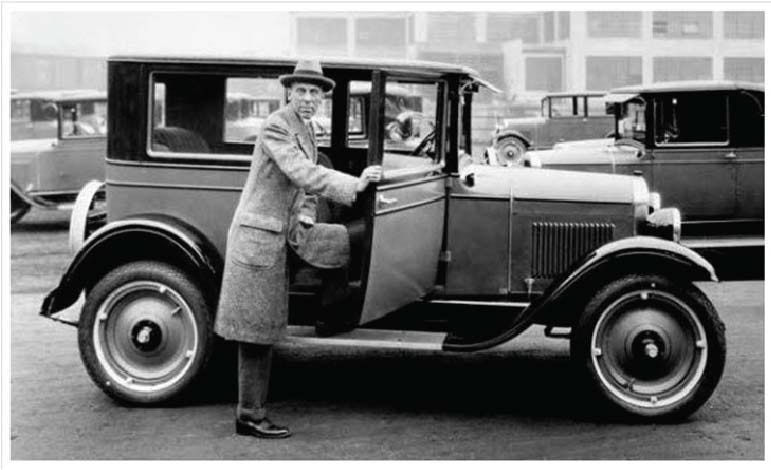
I was reminded of this recently after finishing My Years at General Motors, the 1963 memoir of Alfred P. Sloan, the President and Chairman of GM during this volatile period. Reading it now, against the backdrop of our current environment, was striking. Sloan wasn’t prophetic, but he was disciplined about uncertainty. His leadership at General Motors during that time offers a clear example of how to deal with complexity without pretending it will go away, and how to build institutions meant to absorb stress rather than deny it.
Scale Without Coherence Is a Fragile Advantage
When Sloan stepped into leadership at General Motors in the early 1920s, the company was already large, but it was not particularly strong. GM had grown quickly through numerous acquisitions, stitching together brands, factories, and management teams that operated with a lot of independence and very little coordination. Authority was murky and accountability was scattered. The company had scale, but it lacked shape.
Sloan saw this for what it was: an existential vulnerability. Large organizations without structure can look effective and impressive in calm, normal conditions, but they tend to struggle when things get messy. Complexity creates friction unless it is handled deliberately.
Sloan is refreshingly honest about this reality in his memoir. He describes an organization driven more by personalities than by systems, energetic but disorganized, ambitious but inefficient. His answer was not to centralize everything or clamp down from the top. Instead he introduced structure where none existed, while keeping the initiative that made the company competitive.
What emerged was what Sloan later called coordinated decentralization. In practice, that meant operating divisions had real authority over products, pricing, and day-to-day decisions. They were expected to think and act like owners in their markets. At the same time, finance, capital allocation, and long-term planning were centralized to keep the organization aligned and disciplined.
That balance made all the difference. Autonomy without coordination leads to fragmentation. Coordination without autonomy leads to rigidity. Sloan understood that resilience lives somewhere in between.
Designing for Volatility, Not Stability
One thing that stands out about Sloan’s leadership is how little it depended on prediction. He didn’t try to forecast economic cycles with precision, and he didn’t build the company around a single view of the future. He assumed uncertainty was part of the landscape and designed with that in mind.
That assumption mattered when the global economy of the Roaring 20s slid into the Great Depression. Demand collapsed, credit dried up, and consumer confidence all but disappeared. International trade contracted dramatically as protectionism spread across the globe. Political pressure mounted as governments struggled to respond with limited tools.
Many companies panicked while other froze. Some resorted to cutting expenses indiscriminately, damaging their long-term position to protect short-term cash. Others clung to operating models that worked in good times but proved extremely brittle in bad ones.
General Motors responded differently. It wasn’t immune to the forces at play, but its structure allowed it to adjust without coming apart at the seams. Semi-independent divisions could scale production to match local conditions. Capital could be allocated selectively instead of evenly across the company, allowing the organization to shrink without losing its core.
Sloan didn’t treat the Depression as a temporary inconvenience. He treated it as a condition that had to be managed. That rare mindset shaped every major decision.
Optionality as a Discipline
Two choices from this period capture how Sloan thought.
The first was sticking with annual model changes. These were usually modest updates, more refinement than revolution. Critics called them superficial, but Sloan understood them as a way to manage demand. When consumers hesitate to buy, perceived obsolescence matters. Small changes create reasons to act without forcing big risky bets.
The second was expanding the company’s internal financing arm. By offering direct installment financing when outside credit was unreliable, GM reduced its exposure to financial system stress. This wasn’t just a sales tactic. In reality, it was a structural move that internalized a critical dependency and smoothed demand over time.
Sloan wrote that management’s job is to make sure the organization is never left with only one option. Optionality, not certainty, was the goal.
That idea shows up constantly in how we think at B:Side. We never assume straight lines or frictionless markets. We assume variability and volatility. Our focus is on building internal structures that can adjust without losing clarity or purpose.
Financial Clarity Is About Flexibility
At the center of Sloan’s approach was an insistence on financial clarity. He believed good judgment is impossible if you do not know where you actually stand. Forecasts fail and assumptions break, but clarity preserves the ability to adjust.
Under Sloan, GM built rigorous budgeting, reporting, and performance systems that allowed leadership to see across the organization without micromanaging it. This approach was less about control than it was about minimizing the cost of being wrong.
In volatile environments, the biggest risk is not making mistakes. It is realizing them too late. Financial opacity delays recognition and compounds error. Sloan’s systems were designed to surface reality early, especially when it was uncomfortable.
During the worst years of the Depression, that clarity allowed the company to manage inventories, production, and costs deliberately rather than reactively. Layoffs happened, but they were targeted. Investments continued where they mattered, and core capabilities were preserved even as demand fell.
This distinction between discipline and rigidity is something I come back to often. Discipline keeps options open. Rigidity closes them too soon.
Choosing the Right Battles
The interwar years also reshaped the relationship between business, labor, and government. Organized labor gained power, regulation expanded, and social expectations shifted.
Sloan dealt with these changes pragmatically. When GM faced the sit-down strikes of the late 1930s, the company ultimately recognized unions rather than dragging out conflict. This was a purely practical approach. Sloan realized that prolonged (and likely unwinnable) fights drain energy, and energy is scarce when conditions are tough.
Sloan made a point that still holds true. Management’s job is to operate in the world as it is, not the world it wishes it were. Resistance has a cost, and sometimes that cost outweighs the benefit, however unpalatable it may be.
The same thinking applied to regulation. Regulatory change was treated as something to understand and navigate, not something to fight reflexively. Litigation and defiance were tools, not defaults.
Knowing which battles matter, and which simply consume attention, is a form of wisdom that gets overlooked. In volatile environments, strength often looks like selective engagement, not constant opposition.
Why the Interwar Parallel Still Holds
What makes the interwar period relevant is not the events themselves, but the structure of the moment. High debt limited policy choices, polarization slowed decisions, trade became fragile., and technology outpaced institutions. The cumulative result was a that trust eroded over time.
These forces exposed organizations built for stability, not variability. Many failed not because they were poorly run in normal times, but because they were poorly designed for abnormal ones.
Our environment shares many of these traits. Debt is sky-high, politics is characterized by dysfunction, geopolitics complicate supply chains, and technology is moving faster than governance or culture can absorb.
Linear planning breaks down in these conditions. Single-scenario forecasts become liabilities. What matters is institutional design that holds together under stress.
That is why Sloan still matters. He did not try to eliminate uncertainty. He accepted it and built around it.
Leadership as Architecture
One of Sloan’s lasting lessons is that leadership in complex environments is less about brilliance and more about architecture. Charisma can mobilize people. Structure keeps things standing.
Sloan’s influence stretched far beyond General Motors. His approach to decentralization with centralized discipline shaped modern corporate management. It showed that scale and responsiveness can coexist, and that clarity does not have to come at the expense of autonomy.
This is not a call to copy Sloan’s model. The world is very different than it was in his heyday. What remains useful is the logic underneath it all, the idea that organizations should be built for the conditions they are likely to face, not the conditions they hope will return.
In calm times, weaknesses hide. In volatile times, they surface quickly.
Wisdom as Earned Restraint
When I look back at history, the leaders who stand out are not the ones who claimed certainty, but the ones who practiced restraint. Wisdom is not foresight. It is knowing what not to pretend you know.
Sloan did not know how the Depression would unfold. He did not know how geopolitical tensions would resolve. He did not know which technologies would win. What he understood was how organizations behave under pressure and how quickly poorly designed systems fall apart.
That understanding shaped his choices. Those choices shaped institutions. Those institutions lasted because they were built for variability, not prediction.
At B:Side, this way of thinking runs through how we approach leadership, culture, and durability. We assume uncertainty. We prioritize structure, clarity, and optionality. We try to build structures that can take a hit without losing themselves.
For better or worse, volatility is here to stay for the foreseeable future. What leaders do with that condition determines whether institutions fracture or endure.
Sloan’s legacy is not mastery of uncertainty. It is learning how to live with it productively. In a world where pressure is persistent and margins are thin, that may be the most practical form of wisdom we have.